


PARTICIPANT AREA
medaglie e premi – medals and awards
punteggi – scores
violino – viola – violoncello – contrabbasso
-
Dear Maestros,
what an honor for me to be able to call you that: maestros. And what a responsibility. A maestro is the one who has found ‘something more’, more beautiful, greater, more intense, who has matured and made this gift grow within himself/herself and wishes to share it with others. He/she wants to pass it on and innovate it at the same time. Violin craftmanship is, for you, this ‘more’, this gift which is then a gift for all of us and for humanity. Knowing how to make bowed instruments which generate beauty, sound and music, is that ‘more’ for which you bear the responsibility, that gift for which all of us and Cremona bear the responsibility. In the introduction to the last edition of the Triennale we wrote that the city of Cremona was preparing to build a plan to safeguard the intangible heritage of humanity of violin craftmanship. I can say today that we have succeeded and that this journey with the community of Cremonese luthiers is underway, intense years which have increased knowledge, study, research regarding the heritage itself and confirmed and consolidated the role of Cremona as a world center of violin making. This path will continue and be further strengthened in the coming years because knowledge is the key and decisive factor for passing on and innovating at the same time, and it is also the decisive factor for growing competitiveness on international markets.
This is why the Triennale, the most important violin making competition in the world, takes place in Cremona. And for this reason the best violin makers are part of it and its history over the years is an extraordinary story of artisan-artists who have made and are making the history of contemporary violin making: they innovate and pass on the vital energy of Stradivari, Amati, Guarneri and the great classics at the highest levels, so that contemporary lutherie itself becomes classic in its being contemporary and in its designing today the future of this art in the world.Gianluca Galimberti
Mayor of Cremona and President of the Fondazione Museo del Violino -
For the second time in a row, I will have the honor of presiding over the Jury of the Triennale Competition, now in its 17th edition and which I believe will once again confirm itself as the most important event of this type worldwide. I accepted this position out of a sincere spirit of service towards the community of luthiers, both the local one to which I am particularly attached, and the international one, which I have had the pleasure of getting to know over the now many years of my commitment to the world of violin making.
Once again, a jury of high international standards has been selected, which I believe offers excellent guarantees for a careful and balanced judgment of the competing instruments and which I will make sure to work intensely and in full compliance with the regulation. This regulation has been confirmed in its essential structure, now tried and tested for many editions, with some small but significant operational improvements suggested by the master luthiers, thanks to their direct experience, who were as always consulted in the preparation phases of the competition, and whom I take the opportunity to thank.
To all the competitors, who I am sure will be numerous and qualified, I wish a professionally qualifying and stimulating experience which, whatever the result, will be of help in their growth and career. See you in Cremona.Paolo Bodini
President of the Jury -
ART. 1
The purpose of the 17th International “Triennale” Violin Making Competition Antonio Stradivari is to compare the worldwide standards of contemporary stringed instrument making and to highlight its best results in a fitting context.
The competition is inspired by the classical Cremonese Lutherie, recognized by UNESCO as Intangible Heritage of Humanity.
The competition will take place in Cremona, Italy, and will be divided into the following categories:
a) violin
b) viola
c) cello
d) double bass
Once the jury has completed its deliberations, the instruments fulfilling the jury’s exemplary standards of craftsmanship will be exhibited to the public.
The exhibition of the instruments will take place in Cremona, at the Museo del Violino, Piazza Marconi 5, from September 26th to October 13rd, 2024. During this period it will not be possible to withdraw or replace the instruments.ART. 2
Any full-time professional stringed instrument maker, whether self-employed or not, may participate in the Competition, with no limitation as to nationality, sex or age.
Those related by family ties, up to the fourth degree, to any member of the Jury and anyone who has been employed by one of those members during the last two years are excluded.Applications must be submitted exclusively online on the website www.triennale.museodelviolino.org no later than May 31st, 2024.
Any incomplete application will be rejected. Acknowledgement of acceptance will be sent by email.
Submission of application implies agreement concerning all regulations of the Competition.
The organizing Foundation reserves its right to verify all applications and to exclude them if incorrect.
Any irregularity regarding the declared professional position of the applicant, beside determining the exclusion from the Competition, will be reported to the competent Authority.
By the end of June 2024, the Foundation will communicate to the contestant if he/she has been admitted to the Competition and will ask for further information if necessary.ART. 3
Each contestant may submit no more than two instruments, and no more than one per category. The enrolled instruments must have been made in or after 2021. The gold medal winners in previous editions of the Competition cannot enter an instrument in the same category.ART. 4
Together with the application, through the same webpage www.triennale.museodelviolino.org the participant must make a payment of € 180,00 with the exclusion of bank charges. This sum gives the right to enroll one instrument and to receive one copy of the exhibition catalogue. For a second instrument a further fee of € 100,00 must be paid.
The admission fees will not be reimbursed should applicant decide not to participate to the Competition after the application
has been accepted by the Foundation. Incomplete applications will not be considered, nor will the fees be returned to the applicant.ART. 5
The Jury will not admit instruments to the Competition that:1) have already won awards in either national or international competitions;
2) have been even partially machine-made or varnished by spraying;
3) break with tradition due to their peculiar form, decoration, colour or woods; Permitted wood are as follows: spruce, maple, cedar, beech, pear, poplar and willow. This limitation does not apply to fitting sets and accessories. Technological or composite materials can be used for fingerboard, endbutton, tailpiece and endpin.
4) show artificial antiquing in wood or varnish;
5) have abnormal dimensions. To this effect it has been determined that violas must have a body length
between 400 mm and 425 mm and double basses must have a string length between 104 and 110 cm;
6) show double purfling or other decorations;
7) show brand names on bridge or other accessories;The maker may set up the instrument with strings considered most appropriate. Double basses will be set up with orchestra type strings.
At the Jury’s discretion, thickness checks may also be carried out using instrumental methods.
The instruments enrolled in the Competition must be submitted in a totally anonymous way. Each instrument and its case or shipping crate must be devoid of any signs or elements which could identify the maker. Labels, brands, stamps or monograms of any sort must not be present on the visible internal or external surfaces of the instrument, even if covered. Should an instrument be presented with any such identification, it will be excluded from the Competition.ART. 6
The instruments must be delivered to the Museo del Violino, Piazza Marconi 5, 26100 Cremona during the following days and times:
Friday September 6th and Saturday September 7th, 2024 from 9 am to 1 pm,Sunday September 8th, 2024 from 9 am to 6 pm.
The instruments can be delivered personally or through a trusted person, who will act as official sender, or through a specialized shipping Company.
At the time of delivery, in the presence of the deliverer, a condition report of the instrument will be written and undersigned both by the recipient and the deliverer, with specification of the date and time of delivery and the writing “ORIGINALE”. The report will be preserved and returned to deliverer when the instrument will be picked up.
In case of delivery through a shipping company, opening of the shipping case will be postponed and done by three experts appointed by the Foundation, who will write and undersign a similar report.
Shipped instruments must be delivered between Monday September 2nd and Saturday September 7th, 2024 to the offices of the Fondazione Museo del Violino, between 10 am and 4 pm.Together with the instrument, the following items must be delivered:
1) A sealed envelope with the name of the maker. This envelope will be inserted in a second one provided by the Foundation, which will carry the enrollment number, sealed as well. To further guarantee anonymity, this number will be automatically and randomly converted to a second number that will mark the instrument throughout the Competition. The sealed envelopes will be opened by the Jury’s President only at the end of the judging procedure.
2) An envelope containing a set of the same strings used for the setup of the instrument, which will be given back at the end of the Competition.
3) HD photos of instrument’s front and back, on a white background, which will be used to recognize the instrument at the pickup time, in case of disputes.
4) The printed email showing the acceptance number, received at the time of enrollment.
The cases or crates containing the instruments will not be kept by the Foundation during the Competition, with the exception of the shipped ones, and will be given back to the deliverer.
The recommended forwarding agent of the Competition is MC SERVICE authorized affiliate MAIL BOXES, through the following persons: Zeliani Marcello, via Brescia 30/32, 26100 Cremona, tel. +39 0372/454881. Please remember that instruments from non-EU countries will have to be accompanied by an ATA carnet. Any other forwarding agent selected by the contestants will have to guarantee that the instrument will be delivered and returned employing correct and appropriate practices. All expenses concerning shipment and reshipment are to be met by the contestant.ART. 7
The international Jury will be composed by the President, five master violinmakers and five musicians, as below specified:President: Paolo Bodini (IT)
Luthiers:Ulrich Hinsberger (D), Massimo Negroni (IT), Benjamin Ruth (USA), Elisa Scrollavezza (IT), Gao Tong Tong (CN)
Musicians:Daniel Rubenstein (BE – violin), Alberto Salomon (IT – viola), Dan Sloutskovski (RU – cello), Mirella Vedeva Ruaux (BG – double bass), Fabrizio Von Arx (IT/CH – violin)
All decisions of the Jury are final. The President organizes and leads the works of the Jury, but does not participate
in instruments’ scoring. The contestants will be promptly notified if any change in Jury’s composition should be made by the Foundation.ART. 8
Within the Jury, stringed instrument makers and musicians will work in two separate groups.
For artistic/constructional qualities, luthiers may assign up to 500 points (100 points per juror). The instruments that do not reach the minimum score of 300 points for artistic/constructional qualities will not be submitted to the acoustic tests; however, they may be exhibited and published on the Competition catalogue, with the sole and exclusive concurrence of the Jury.
For acoustic qualities, musicians may assign a maximum of 400 points (80 points per juror). The evaluation of playability will be expressed only by the musician who plays the instrument during the acoustic tests and acknowledged by the other musicians of the Jury.
For each category a referral instrument, chosen by the Jury among previous Competition winners, will be used for acoustic evaluation.
Each mark – from 1 to 10 for luthiers and from 1 to 8 for musicians – will be multiplied by the following coefficients:1) Artistic/constructional qualities:
a) Technical level of work 26% coeff. of 2.6
b) Set up 21% coeff. of 2.1
c) Quality of varnish 22% coeff. of 2.2
d) Overall style and character 31% coeff. of 3.1
2) Acoustic characteristics:
a) Quality of timbre 35% coeff. of 3.5
b) Strength of tone 25% coeff. of 2.5
c) Balance between strings 20% coeff. of 2.0
d) Playability 20% coeff. of 2.0The total number of points will determine the merit ranking. The instruments which the Jury will consider eligible in accordance with their score, will take part in the final acoustic test, which will be open to public; such instruments may not be less than 10 for the category of the violin, 6 for the viola, 6 for the cello and 3 for the double bass. The musicians to re-check the scores awarded will subject all the instruments admitted to the final test to a second acoustic test.
During this trial the instruments will be played both as “solo” starting with a scale in G major for violins (D major for the other instruments) and with piano accompaniment.
For what concerns the violins, being two the violinists in the Jury, one will perform the solo pieces, while the other one the accompanied pieces, in each case playing the scale at the beginning.Each juror will assign up to 10 points and thus the Jury, as a whole, will be able to allocate a total of 100 points to the examined instruments. The total number of points, calculated by adding up the points gained by each instrument in the final and the preceding tests, will determine the final classification of the Competition and the honorable mentions. The gold medal for each category will be awarded only with the favorable vote of at least 8 out of 10 members of the Jury.
The list of the instruments admitted to the final acoustic test will be published in due time on the Foundation’s website, labeled by the enrolling numbers assigned to them at the time of their submission to the Competition. These numbers will remain undisclosed until the end of the Competition.ART. 9
The International Competition Antonio Stradivari offers four prizes, which may not be shared among instruments, as hereby specified:– for the best violin: gold medal, honor certificate, and purchase of the instrument by the Foundation for € 16,000.00;
– for the best viola: gold medal, honor certificate, and purchase of the instrument by the Foundation for € 16,000.00;
– for the best violoncello: gold medal, honor certificate, and purchase of the instrument by the Foundation for € 26,000.00;
– for the best double bass: gold medal, honor certificate, and purchase of the instrument by the Foundation for € 28,000.00.(In this respect, please note that the prizes are inclusive of VAT according to European tax laws and inclusive of custom duties for non-EU countries).
- Four silver medals and a prizeof € 2,500.00 each for those classified second in each of the four categories.
• Four bronze medals and a prize of € 1,500.00 each for those classified third in each of the four categories.
• The Jury may award further honor mentions to finalists in each of the four categories.
Prizes for second and third place are kindly offered by the Chamber of Commerce – Cremona.
– The Municipality of Cremona will award the “Simone Fernando Sacconi” prize, consisting of a gold medal, to the contestant under 30 years of age on 31/12/2024 who, according to the final decision of the Jury, is considered the most deserving.
– The “Walter Stauffer” Centre of Musicology will award a gold medal to the contestant who has presented the best instrument for acoustic qualities.
– “Pierangelo Balzarini” award (private): gold medal to the Cremonese maker who has reached the highest score in one of the four categories for artistic/constructional qualities.
– A.L.I. award (offered by Associazione Liutaria Italiana): silver plate to be given to an Italian maker not classified among the first three of any category, for an instrument with peculiar personality within the Italian tradition and culture.
– “Cremona Mondomusica” prize (offered by CremonaFiere) consisting in a stand for single exhibitor in Cremona Mondomusica 2025 for each of gold medal winners.
– The Fondazione Cologni dei Mestieri d’Arte will award a prize of € 1,000.00 to the best classified foreign violinmaker, regularly working in Italy.
– “Giorgio Cè” award (private): prize of € 1,000.00 to the Cremonese female violinmaker with the best instruments as far as varnish is concerned.
– “Piero Ferraroni” award (private): prize of € 1,000.00 for the best carving of a cello scroll.It is permissible for multiple awards to be won by a single contestant. The Jury reserves the right not to award all the prizes in each category if there are no works deemed worthy.
All contestants admitted to the Competition will receive a certificate of participation. A complete color catalogue of the admitted instruments will be published by the Foundation. A copy of the catalogue will be given to all the violinmakers enrolled in the Competition, without further charge.
The winning instruments in the respective category will be placed on permanent display open to public in the premises of the Fondazione Museo del Violino in Cremona, and may, at the discretion of the Foundation, be temporarily entrusted to musicians.ART. 10
Once the Jury has finalized its decisions regarding marks and placement, the envelopes containing the names of the contestants will be opened and the results of the Competition will be published after the award ceremony.
Each contestant will be able to download from the Foundation’s website his/her own card reporting the assigned marks.
All marks will be published on the Foundation website listed by enrollment numbers.
The envelopes related to instruments not admitted to the Competition will remain sealed until the Competition results have been published.
On Thursday, September 26th the Jury members will meet the competitors who will ask for, at a time to be communicated before the end of the Competition.ART. 11
The award ceremony will take place on Wednesday, September 25th in the Amilcare Ponchielli theatre at 8.30 pm, followed by a concert on the winning instruments.ART. 12
After the end of the exhibition, instruments, spare strings and photos can be retrieved only by a person exhibiting the consignment receipt marked “ORIGINALE”.
All instruments must be collected within 3 days after the end of exhibition. Any instrument not collected in due time will be stored in the Foundation premises at the cost of € 20,00 for each week or week’s portion.ART. 13
The Foundation will insure the instruments against the risks of fire, theft and accidental damage. Conventionally, the insured values are as follows:
1. € 10,000.00 for each violin
2. € 12,000.00 for each viola
3. € 18,000.00 for each violoncello and double bass.
The insurance coverage is valid from the moment the instrument is delivered to the Foundation until the time of withdrawal or when instruments not retrieved are deposited in the Foundation premises as specified in Art. 12.ART. 14
In the event of any controversy arising from interpretation or application of the above Regulations, only the court in Cremona will have jurisdiction.ART. 15
The English translation of these Regulations is solely for the convenience of the contestants. In the event of controversial interpretation, only the Italian text will be considered valid.Any requests for information or other correspondence should be addressed to: triennale@museodelviolino.org
- Four silver medals and a prizeof € 2,500.00 each for those classified second in each of the four categories.
-
medaglie e premi – medals and awards
punteggi – scores
violino – viola – violoncello – contrabbassoCATEGORIA VIOLINO
Medaglia d’oro non assegnato
Medaglia d’argento Liu Zhaojun
Medaglia di bronzo ex aequo Mandelli Renzo – Seyda MilosCATEGORIA VIOLA
Medaglia d’oro non assegnato
Medaglia d’argento Borja Bernabeu
Medaglia di bronzo Piotr PielaszekCATEGORIA VIOLONCELLO
Medaglia d’oro Alessandro Peiretti
Medaglia d’argento Michele Giovanni Dobner
Medaglia di bronzo Francesco CoquozCONTRABBASSO
Medaglia d’oro non assegnato
Medaglia d’argento non assegnato
Medaglia di bronzo ex aequo Cipriani Chereches Cesare – Tetsu SuzukiPremio “Simone Fernando Sacconi” – violino Kubacka Pawel
Premio “Walter Stauffer” – viola Piotr Pielaszek
Premio “Pierangelo Balzarini” – violino Park Hyun-Jung
Premio “A.L.I.” (Associazione Liutaria Italiana) – violoncello Rocca Giacomo
Premio “Cremona Mondomusica” – violoncello Alessandro Peiretti
Premio “Fondazione Cologni dei MesHeri d’Arte” – viola Borja Bernabeu
Premio “Giorgio Cè” – violino Park Hyun-Jung
Premio “Piero Ferraroni” – violoncello Alessandro Peiretti
MENZIONI D’ONORE
CATEGORIA VIOLINO
Pawel Kubacka – Damiano Catesi – Gianluca Coratza – Qingwu Zhang – Elià Fabré Capdevila/Aogu Shimasaki Arakawa – Brian de Boer – Marcello BelleiCATEGORIA VIOLA
Weitong Zhang – Emanuele Francioli – Shoichi Ebata – Nakabayashi Yuzuru – Pawel KubackaCATEGORIA VIOLONCELLO
Luca Bastiani – Nagaishi Hayato – Jinwook – Hook Minyo StoyanovCATEGORIA CONTRABBASSO
Cristiano Scipioni -
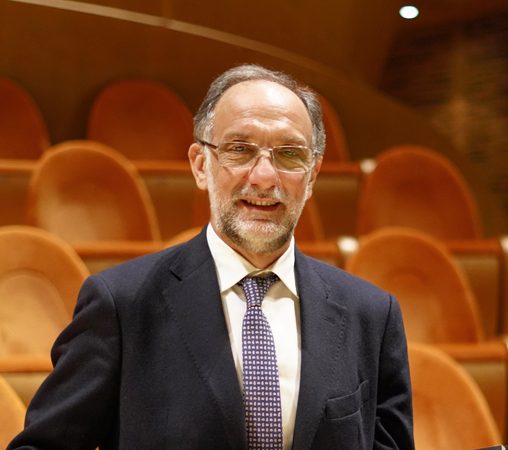
Paolo Bodini (IT)
PresidentViolin Makers
 Ulrich
Hinsberger
(D) Massimo
Negroni
(IT) Benjamin
Ruth
(USA)
 Elisa
Elisa
Scrollavezza
(IT) Gao
Gao
Tong Tong
(CN)Musicians
 Daniel
Rubenstein
(BE – violin)
 Alberto
Salomon
(IT – viola)
 Dan
Dan
Sloutskovski
(RU – cello) Mirella
Vedeva Ruaux
(BG – double bass) Fabrizio
Von Arx
(IT/CH-violin) -
I Triennale 1976
violino – Giorgio Ce’ (Italia)
viola – Piero Badalassi (Italia)
violoncello – Erminio Malagutti (Italia)II Triennale 1979
violino – Augustin Andreas (Germania)
viola – Alexander Muradov – U.R.S.S.
violoncello – Roger Graham Hargrave (Gran Bretagna)III Triennale 1982
violino – Sonoda Nobuhiro (Giappone/Germania)
viola – David Burgess (Stati Uniti)IV Triennale 1985
violino – David Gusset (Stati Uniti)
viola – Nicola Lazzari (Italia)
violoncello – Primo Pistoni (Italia)V Triennale 1988
violino – Marcello Ive (Italia)
viola – Dante Fulvio Lazzari (Italia)
violoncello – Pierangelo Balzarini (Italia)
contrabbasso – Marco Nolli (Italia)VI Triennale 1991
violino – Luca Sbernini (Italia)
violoncello – Luca Sbernini (Italia)VII Triennale 1994
violino – Helmut Muller (Germania)
violoncello – Alessandro Voltini (Italia)VIII Triennale 1997
violino – Primo Pistoni (Italia)
viola – Christopher Rowe (Gran Bretagna)IX Triennale 2000
violino – Kolja Jens Lochmann (Germania)
viola – Marcus Klimke (Germania)
violoncello – Kolja Jens Lochmann (Germania)X Triennale 2003
violino – Jan Baptista Špidlen (Repubblica Ceca)
violoncello – Raymond Schryer (Canada)XI Triennale 2006 violoncello
Francesco Toto (Italia)XII Triennale 2009
violino – Marko Pennanen (Finlandia)
viola – Antoine Cauche (Francia)
violoncello – Silvio Levaggi (Italia)XIII Triennale 2012
violino – Ulrich Hinsberger (Germania)
viola – Ulrike Dederer(Germania/Svizzera)
contrabbasso – Marco Nolli (Italia)XIV Triennale 2015
viola – Charles Coquet (Francia)XV Triennale 2018
violino – Nicolas Bonet (Francia)
violoncello – Gawang Jung (Corea del Sud)XVI Triennale 2021
violoncello – Kazune Nemoto (Giappone/Italia)
contrabbasso – Guido Mariotto (Italia)XVII Triennale 2024
violoncello – Alessandro Peiretti (Italia)
